The country
Stockmen and ringers
Who the stockmen of northern Australia were and are, what a stock camp is, and why a station show puts a horse and a dog team in the arena.
Book the Katherine show on Viator ↗Quick answer
A stockman looks after livestock on a station, traditionally on horseback, and in the Top End stockmen are called ringers. The Katherine show draws on that world: horse-starting, working dogs and yarns about station life. It is a show about the work, not a recreation of one station's history, and the operator says it aims to show the Northern Territory's pastoral story.
What a stockman is
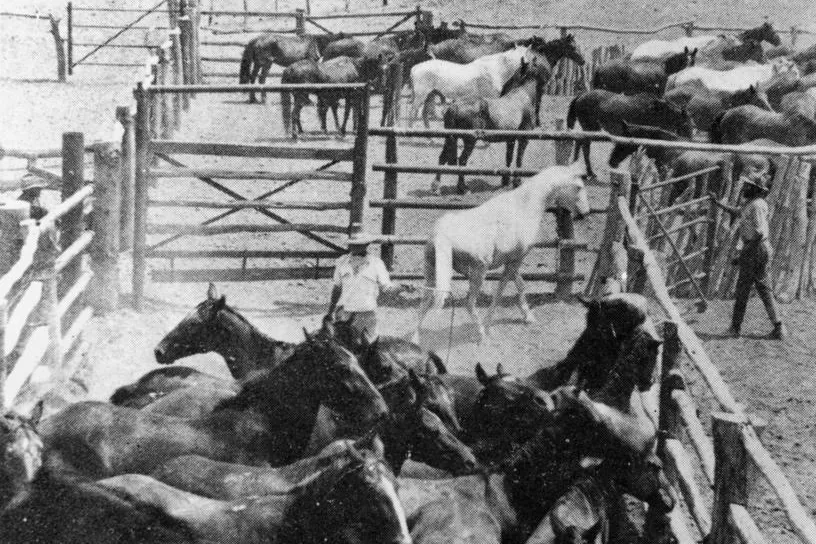
Wikipedia describes a stockman as a person who looks after the livestock on a station, traditionally on horse. It lists the work as including feeding, watering, mustering, droving and branding, and says stockmen traditionally ride horses and use working dogs and a stockwhip. A drover is employed while travelling on a stock route, and is often an itinerant worker. The booking page lists the show's own cast as a team that works with horses and dogs, so you are watching the same pairing in an arena.
Ringers in the north
Wikipedia says stockmen in the Top End are called ringers. It says mustering is done with horses or vehicles, including all-terrain vehicles, and that some large stations use helicopters or light aircraft to help muster livestock and watch their watering points. The show keeps to the older tools of horse and dog, and the operator says it is raw and real, the same as if an audience were not present. That is the operator's own wording, not an independent claim.
A stock camp
Wikipedia says that mustering often means days camping out in isolated areas, with stockmen sleeping in a swag, a bedroll on the ground, on limited food. The operator's venue page describes a stock camp on its own property, with a campfire, a stage and a dance floor, and says days in the stock camp were some of the best of its team's lives. That is where many of the bush yarns the booking page promises come from. You will not visit the camp on this ticket.
The people who did the work
Wikipedia says the role of the mounted stockmen came into being early in the 19th century, and that Aboriginal Australians were good stockmen who played a large part in the successful running of many stations. It also records the 1966 Wave Hill walk-off, a strike by Gurindji workers led by Vincent Lingiari on a large Vesteys cattle station in the Northern Territory. A show with a station theme sits in that history, and a visit is a good moment to read more about it.
Where the show began
The operator's own account is that in 2011 the Australian Government imposed a sudden ban on live cattle exports, which left its founder, a horse trainer, without work as stations halted operations. He turned to playing music, and the operator says a visitor then asked to watch him work with horses, which led to the show's start in July 2013. This is the operator's story, told in its own words and not checked elsewhere. It explains why the show combines horse training, bush storytelling and country music.
What this means for your visit
Go expecting a working demonstration, not a museum. The booking page says a young horse is started live and that things do not always go to plan, and the operator says the team explains the training behind it. If you want history, read Wikipedia on stockmen before you go. If you want the country itself, spend a second day at the gorge, because Nitmiluk is the landscape these stations sit in.
Read next: Outback show or Nitmiluk?
Frequently asked questions
What is a ringer?
Wikipedia says stockmen in the Top End are called ringers. A stockman looks after livestock on a station, traditionally on horseback, with working dogs.
Is the show historical?
It is a working demonstration of horse-starting and dog work with yarns about station life. The operator says it aims to bring the Northern Territory's pastoral story to life.
Do stations still use horses?
Wikipedia says mustering is done with horses or vehicles, and that some large stations use helicopters or light aircraft to help.
Sources